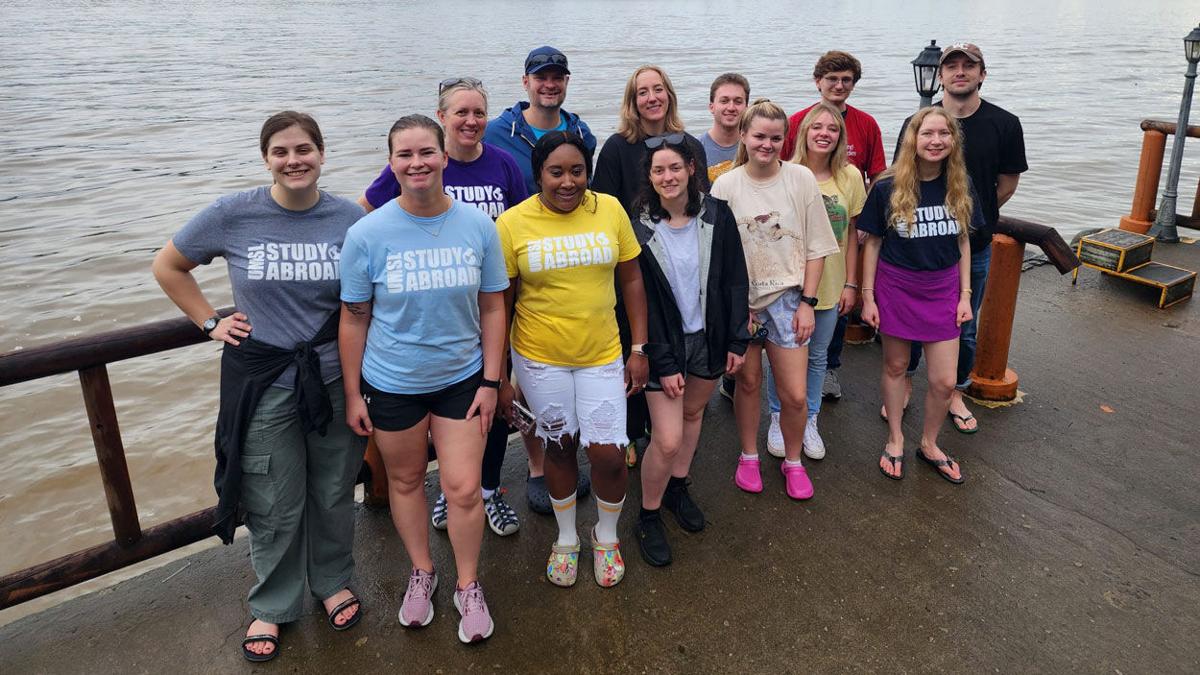
Studying abroad can be a transformational experience for students, allowing them to immerse themselves in new cultures and broaden their horizons. But for many students, cost remains a significant barrier to the experience.
"For many of our students, just getting a passport is the first obstacle of several that they encounter to make a global experience or a study abroad program possible," said UMSL Study Abroad Manager Maggie Hook, who submitted the grant on behalf of UMSL Global. "Our hope is that by removing the financial barrier for these students to obtain a passport, they will be more likely to participate in a study abroad experience during their UMSL journey."
Now in its sixth year, the IIE American Passport Project has awarded grants to 40 institutions in its network to help 1,000 Pell-eligible college students study abroad. The project aims to grant 10,000 U.S. students their passports by the end of the decade, with an emphasis on student populations from low-income backgrounds, students who have not traveled abroad as an adult or in a learning environment and students in their first year at the institution.
This is the first year that UMSL has been selected for an IIE American Passport Project grant. UMSL Global will manage the application, selection and distribution process during the 2026-27 academic year, and students who meet the criteria are encouraged to apply at the beginning of the fall 2026 semester. Hook hopes the grant will make studying abroad more accessible to students who might not have been able to take advantage of those opportunities otherwise.
"A lot of our students juggle various responsibilities beyond being a student," Hook said. "We’re trying to expand access and opportunities so that anyone who wants a global experience to be part of their degree program can achieve that. We do that through scholarships, through expanding our portfolio of programs and through recognizing that a lot of our students have never gone on an airplane before, let alone have a passport. We’re doing anything and everything we can to reduce and remove barriers."
This content is sourced from
University of Missouri St. Louis
. It reflects the author's views and has not been edited by our newsroom. It may have been generated using AI assistance.